+86-576-82686004
 allen@badavalve.com / daisy@badavalve.com



 EN
EN
 Español
Material Compatibility and System Requirements
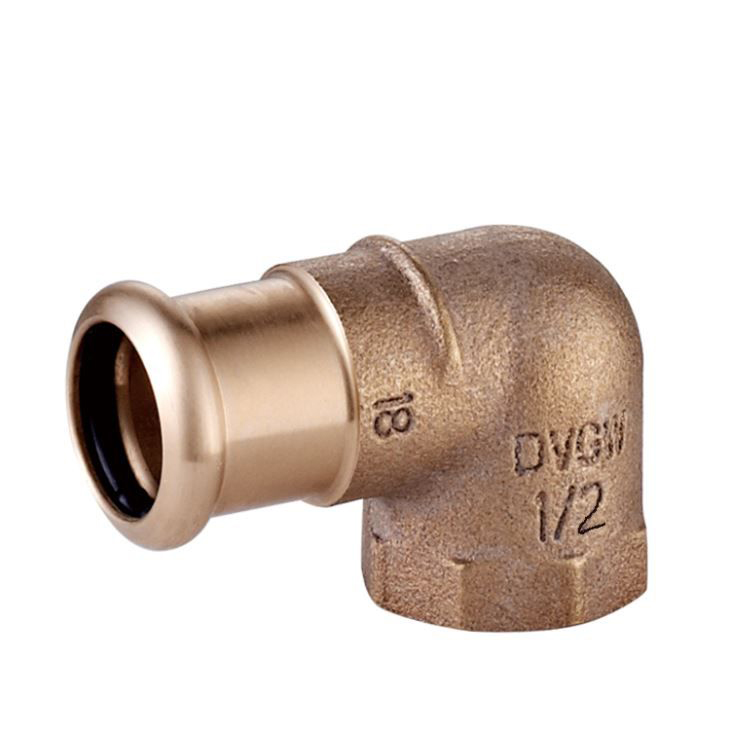
Press fit brass elbows are designed for specific piping materials and system conditions. Before installation, verifying compatibility between the fitting and the adjoining pipe is essential. These elbows are typically manufactured for use with copper tubing, multilayer composite pipes, or stainless steel pipes, depending on the product line. The fitting body is constructed from dezincification-resistant (DZR) brass or similar copper alloys, which provide corrosion resistance in potable water and hydronic heating applications.
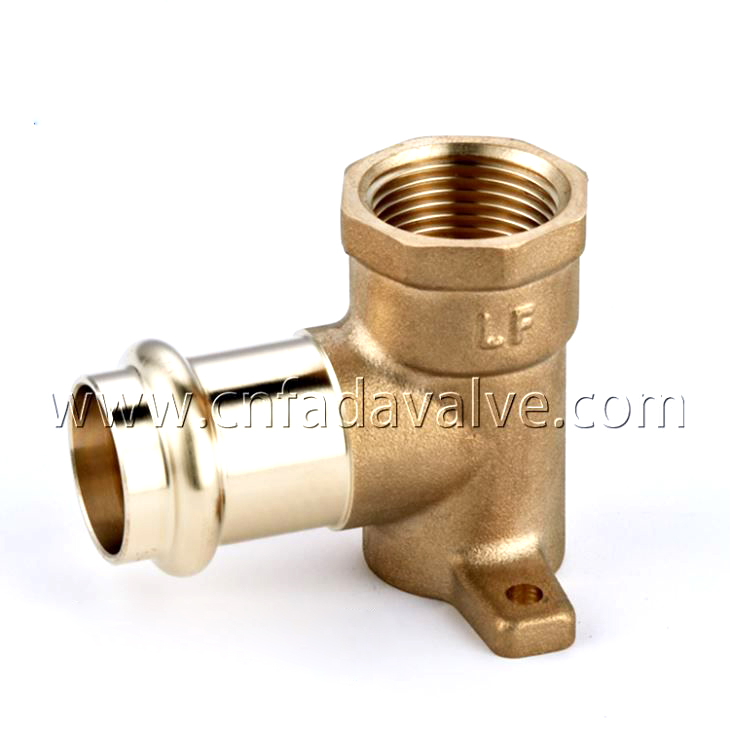
The sealing O-rings are formulated from materials such as ethylene propylene diene monomer (EPDM), nitrile rubber, or fluorocarbon elastomers, each suited to different temperature ranges and fluid types. EPDM seals are common in potable water and heating systems, with service temperatures typically ranging from -30°C to 110°C. For systems carrying petroleum-based fluids, glycol mixtures, or compressed air, the seal material must be verified for chemical compatibility. Using an elbow with an incompatible seal leads to premature seal degradation and subsequent leakage. Manufacturers provide material specifications for each fitting series, and these should be consulted before installation in non-standard applications.
Proper Installation Procedure and Tool Requirements
The reliability of a press fit brass elbow depends heavily on correct installation technique. Unlike threaded or soldered connections, press fittings create a permanent mechanical joint through radial compression of the fitting socket onto the pipe. This process requires specialised pressing tools and calibrated jaws designed for the specific fitting brand and size. Intermixing components from different manufacturers is not recommended, as dimensional standards and pressing profiles vary, potentially resulting in incomplete compression or joint failure.
The installation sequence begins with pipe preparation. The pipe end must be cut squarely—typically within a tolerance of 3 degrees from perpendicular—using a pipe cutter rather than a saw, which creates uneven edges. Burrs inside and outside the pipe are removed with a deburring tool; residual burrs can damage the O-ring during insertion or create turbulence that accelerates erosion. The pipe is then cleaned to remove debris, oil, or oxidation, and the insertion depth is marked using a depth gauge or the fitting manufacturer's reference tool. This marking allows visual verification that the pipe has been fully inserted into the fitting socket before pressing.
Insertion requires inserting the pipe into the fitting until the end contacts the internal stop or until the depth mark aligns with the fitting face. The pressing tool, equipped with the appropriate jaw set, is positioned over the fitting socket. The jaw profile must align precisely with the pre-formed pressing zone on the fitting body. Activation of the tool compresses the socket radially, displacing material and creating a permanent deformation that locks the pipe in place and compresses the O-ring against the pipe surface. After pressing, a visual inspection confirms that the pressing profile is fully formed and that the pipe remains at the correct insertion depth. Some manufacturers incorporate a “press indicator” feature, such as a small protrusion that deforms upon proper compression, providing a clear visual confirmation of a completed joint.
Inspection, Testing, and Quality Assurance
Following installation, verification of joint integrity is necessary before concealing or pressurizing the system. The press fit process produces joints that are immediately capable of holding pressure, but several factors warrant attention during inspection.
Visual inspection constitutes the first level of quality assurance. The pressing profile should exhibit uniform deformation around the entire circumference of the fitting socket. Incomplete or asymmetric pressing—often caused by misaligned tool jaws or insufficient tool battery charge—may result in inadequate sealing pressure. The pipe should remain at the originally marked insertion depth; any significant withdrawal indicates improper seating. Visible gaps between the pipe and fitting face beyond manufacturer-specified tolerances suggest incomplete insertion.