+86-576-82686004
 allen@badavalve.com / daisy@badavalve.com



 EN
EN
 Español
Plumbing and HVAC projects involving potable water lines face a decision that goes beyond pipe sizing and pressure ratings. The method used to connect the fittings matters — it affects installation speed, site safety, long-term reliability, and compliance with drinking water regulations. No Lead Brass Fittings have become the standard specification for potable water systems in many markets, and how those fittings are joined to the pipe network shapes the overall performance of the installation. Press-fit systems and traditional soldering both achieve a sealed connection, but they approach that outcome through fundamentally different mechanisms — and those differences carry real consequences for contractors, building engineers, and procurement teams evaluating which direction to take.
What Is a Press-Fit Connection?
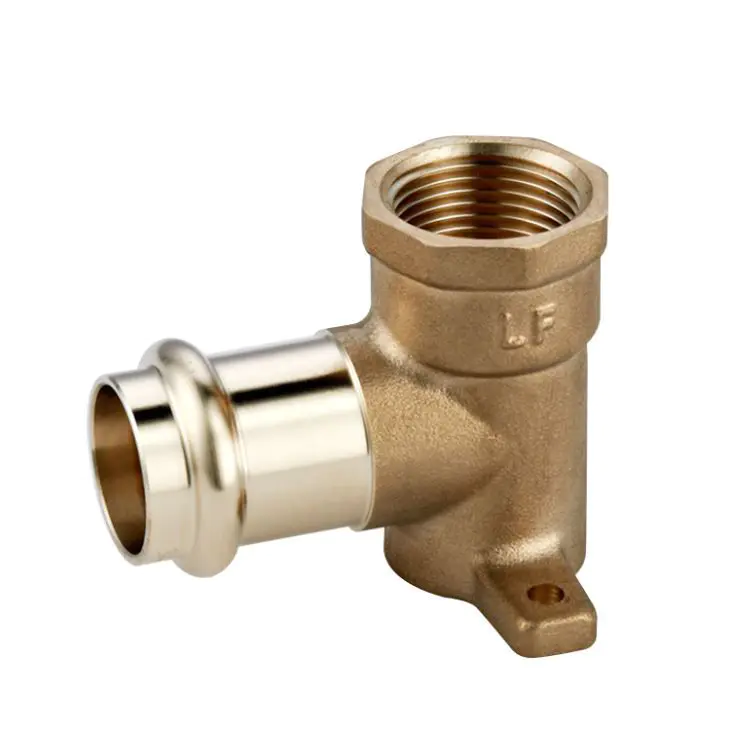
How the Mechanism Creates a Seal Without Heat
A press-fit connection uses a mechanical crimping action to join a fitting to a pipe. The fitting sleeve contains an elastomeric sealing ring. When the press tool is applied, it compresses the fitting body uniformly around the pipe, driving the sleeve into contact with the pipe surface and compressing the seal ring simultaneously. The result is a connection that holds pressure through mechanical interference rather than through a metallic bond.
The critical point is that no heat is involved. No torch. No flux. No solder wire. The tool does the work mechanically, and the connection is complete in a few seconds per joint.
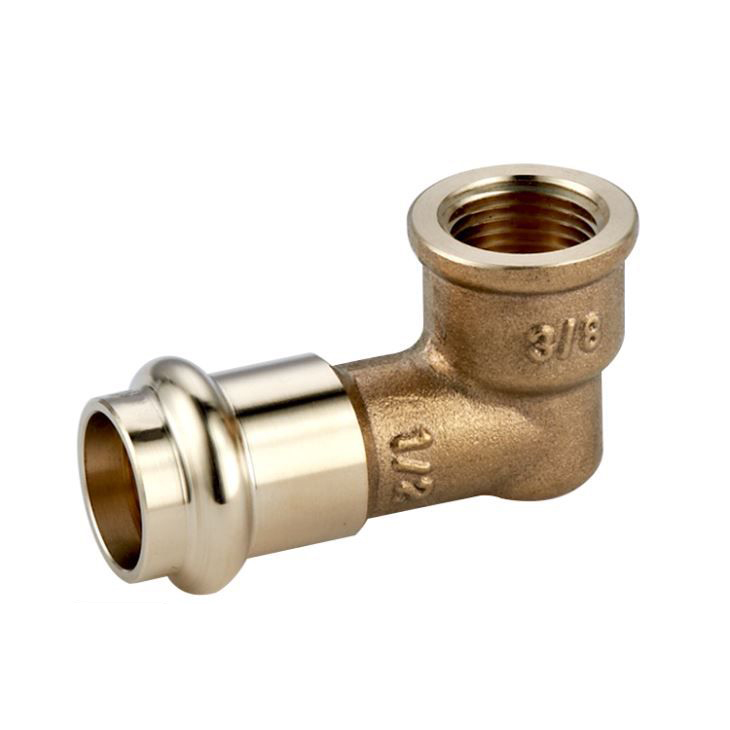
Press-fit fittings are available in multiple configurations — elbows, tees, reducers, couplings — and are compatible with copper, stainless steel, and some plastic pipe types depending on the system specification. For applications using brass fittings, press-fit versions are available from several manufacturers and cover standard pipe sizes used in commercial and residential plumbing.
How Does Traditional Soldering Work?
The Established Method and Its Requirements
Soldering — sometimes called sweat fitting — joins copper pipe to fittings by heating the joint area with a torch and drawing molten solder into the gap between the fitting socket and the pipe wall through capillary action. When cooled, the solder solidifies and creates a metallic bond across the joint interface.
The process requires:
- A torch with a fuel source — propane or MAPP gas
- Flux applied to the cleaned pipe and fitting surfaces before heating
- Solder wire fed into the heated joint
- Skill and attention to heating uniformity and solder application timing
Soldering is a well-established technique with decades of proven performance in plumbing systems. When executed correctly by a skilled tradesperson, a soldered joint is durable and capable of sustaining high operating pressures over a long service life. The limitation is not the method itself — it is the conditions under which the method must be applied.
Why Does the Connection Method Matter for Lead-Free Systems?
The Relationship Between Material Specification and Installation Approach
The move toward brass fittings without the element once common in such alloys — used in drinking water systems — came from regulatory requirements aimed at reducing human exposure to that element through water contact. Fittings, valves, and associated components in potable water systems must now meet compositional standards that limit the weighted average content of wetted surfaces to a defined threshold.
This material change has an indirect but important effect on installation method selection. Soldering introduces heat into the joint area, and heat affects the metallurgical properties of the fitting material near the joint. For standard brass, the effect is well understood and manageable. For brass alloys made without the machining aid found in older formulations — these alloys often use bismuth, silicon, or other substitutes — thermal behavior during soldering can vary.
Beyond the material question, there is a practical hygiene concern. Flux residue inside a soldered fitting can introduce contaminants into the water stream if not fully flushed. In a potable water system, that flush-out requirement adds a post-installation step that press-fit systems avoid entirely.
Lead-Free Brass Valves and related components specified for potable water applications benefit from connection methods that avoid adding variables to the system's water quality performance. Press-fit connections, with no flux and no heat, align well with that requirement.
Installation Speed: Where the Difference Is Most Visible
Time on Site and What It Costs
The speed advantage of press-fit connections over soldering is clearest on large-scale projects or in retrofit situations where many connections must be made in a limited time window.
Soldering a joint involves cleaning the pipe, applying flux, heating the joint to temperature, applying solder, allowing it to cool, and inspecting the result. Each joint takes significantly longer than a press-fit connection, and the pace is limited by how quickly the torch heats each joint to the right temperature — which varies with pipe diameter and ambient conditions.
A press-fit connection requires cleaning the pipe end, marking the insertion depth, inserting the pipe into the fitting, and applying the press tool. The press itself takes only a moment. The tool can move to the next joint immediately. For a project with a large number of joints, this difference compounds into a substantial labor time reduction.
There is also the issue of preparation. Soldering requires access to fuel, a working torch, and fire safety precautions at each work location. In occupied buildings, hospitals, schools, or any environment where an open flame is impractical or restricted, soldering either cannot be used at all or requires extensive fire watch and safety coordination. Press-fit eliminates that constraint entirely.
Is a Press-Fit Joint as Reliable as a Soldered Joint?
Long-Term Performance and Failure Modes
A reasonable concern about press-fit technology is whether the mechanical connection is as durable as a metallic bond. This is a legitimate question, and the answer depends partly on the specific system and partly on installation quality.
Modern press-fit systems used in plumbing applications are tested to recognized industry standards covering pressure, temperature cycling, and long-term leak resistance. When installed with the correct press tool, using fittings and pipe within the specified combination, press-fit joints perform reliably across the pressure and temperature ranges of standard plumbing and HVAC applications.
The failure modes differ between the two methods. A soldered joint can fail due to a cold solder joint — insufficient heat during installation leads to incomplete bonding that holds initially but fails under pressure cycling over time. A press-fit joint can fail if the pipe is not fully inserted to the depth mark before pressing, or if the pipe end is out of round and the seal ring is not compressed uniformly. Both failure modes are identifiable during installation with proper inspection — soldered joints by visual inspection of solder flow, press-fit joints by checking the mark and using go/no-go inspection gauges available with some tool systems.
One practical advantage of press-fit worth noting: an unPressed fitting — one that was placed but not yet pressed — can be identified visually before the system is pressurized. A missing press is a visible error. A cold solder joint may not be visible at all until the system is pressurized and tested.
Comparing the Two Methods Across Key Project Factors
| Factor | Press-Fit System | Traditional Soldering |
|---|---|---|
| Installation Speed | Faster per joint | Slower per joint |
| Open Flame Required | No | Yes |
| Suitability for Occupied Buildings | Strong | Requires fire precautions |
| Flux Residue in System | None | Must be flushed |
| Skill Requirement | Lower — tool does the work | Higher — technique dependent |
| Material Compatibility with Lead-Free Brass | Good — no heat effect on alloy | Variable — heat affects alloy near joint |
| Fitting Cost | Higher | Lower |
| Labor Cost | Lower | Higher |
| Inspection of Joint Quality | Visible mark check | Visual flow inspection |
| Long-Term Reliability | Good with correct installation | Good with correct installation |
Neither method is categorically unreliable. The practical advantage of press-fit is its lower dependence on individual skill and its suitability for environments where open flame is not appropriate. The practical advantage of soldering is its lower fitting cost and the fact that every plumber is trained in it. Which factor weighs more depends on the project context.
When Does Each Method Make More Sense?
Matching the Connection Method to the Application Context
No single connection method fits every project equally well. The right choice emerges from evaluating what the project actually demands.
Press-fit is likely the stronger choice when:
- The project is in an occupied building where open flame is impractical or restricted — hospitals, schools, hotels, data centers
- The installation schedule is tight and labor efficiency is a priority
- The system uses No Lead Brass Fittings where flux contamination and heat effects on alloy composition are concerns
- The workforce includes less-experienced installers where minimizing technique-dependent failure modes reduces rework risk
- Local regulations or project specifications restrict soldering in specific areas
Soldering remains a practical choice when:
- The project is in an unoccupied space with no fire risk restrictions and easy access for torch work
- Fitting cost is a significant constraint and the labor cost differential is less important
- The workforce has strong soldering skills and the project pace does not create pressure to accelerate installation
- Pipe sizes are standard and the full range of required fittings is available in solder-type formats
Mixed approaches are also common. Larger diameter main runs might use press-fit for speed and safety, while smaller branch connections in accessible utility areas use soldering. The decision does not have to be all-or-nothing.
Lead-Free Brass Nipple and Valve Connections in Press-Fit Systems
How the Full System Fits Together
A press-fit connection at the fitting does not mean every component in the system is press-connected. Lead-Free Brass Valves and Lead Free Brass Nipple sections are typically threaded or flanged connections that join to the pipe system at service points — isolation valves, balancing valves, drain points, and connection to appliances.
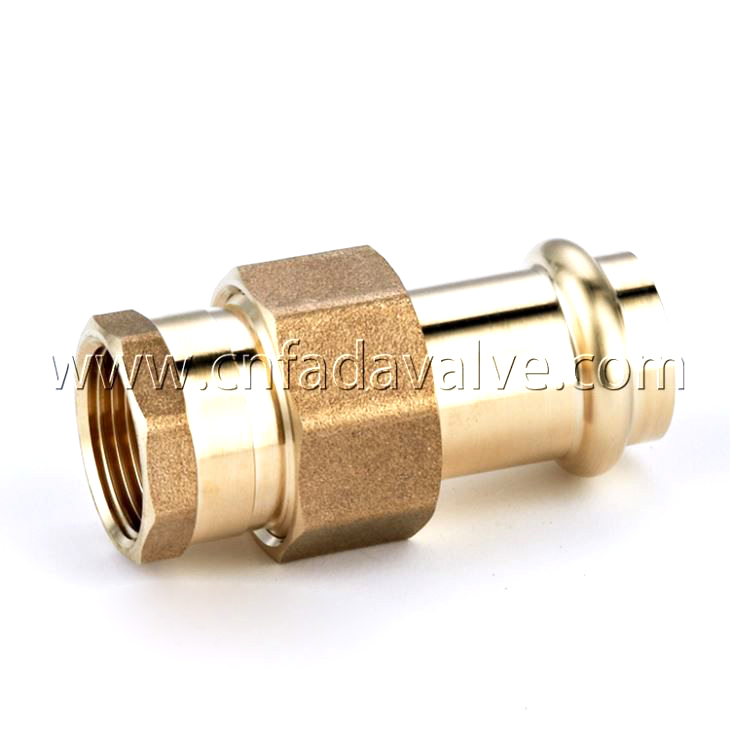
When the pipe runs use press-fit technology, the transition to threaded valve connections is made through press-to-threaded adapters — fittings that have a press socket on one end and a threaded male or female outlet on the other. These allow press-fit pipe systems to connect cleanly to standard valve and nipple thread specifications without requiring any soldering or flame work at the valve location.
For potable water systems where the valve connections are specified as No Lead Brass Fittings and Lead-Free Brass Valves, this full system approach maintains material compliance throughout the installation. The press connections carry the pipe runs; the threaded fittings and valves free of that element serve the service points; and no part of the system wetted by the water stream introduces that element above the regulated threshold.
Cost Comparison: What Does Each System Actually Cost?
Thinking Beyond the Fitting Price
The fitting-level cost comparison between press-fit and solder-type fittings consistently shows press-fit as more expensive per piece. This is true and relevant, but it is not the complete cost picture.
Labor time is a project cost. If a skilled plumber takes significantly longer to complete the same number of joints with solder than with a press tool, the labor differential needs to be weighed against the fitting price difference. On large projects, labor savings from press-fit frequently offset the material cost premium.
Project delays also carry cost. In building interiors where soldering requires fire watch staff, fire safety coordination, and post-work inspections, the indirect costs of compliance with hot work procedures add to the true cost of the soldering approach. These costs are invisible in a fitting-level price comparison but very visible in project management.
Rework costs matter too. A press-fit joint installed incorrectly is typically a visible error correctable before pressurization. A cold solder joint found during pressure testing requires cutting out the fitting and re-soldering, which has direct labor cost and schedule impact.
The total cost of each approach is project-specific. A simple cost comparison at the fitting level understates the labor and schedule factors that often favor press-fit in commercial and institutional projects.
Compliance Considerations for Potable Water Systems
How Connection Method Intersects With Regulatory Requirements
Drinking water system components in regulated markets must meet compositional standards for materials in contact with water. No Lead Brass Fittings are specified and certified to meet those standards at the material level. Connection method affects whether that material-level compliance is maintained through the installation process.
Flux used in soldering is a chemical agent. Residue left in the pipe system after installation can introduce compounds into the water stream. Proper flushing procedures are designed to clear that residue before the system is commissioned for use. In practice, the thoroughness of flushing varies, and residue in inaccessible locations may not be fully cleared.
Press-fit connections introduce no flux and no chemical residue. The seal is mechanical. The water contact surface is the pipe interior and the fitting bore — both specified and tested as part of the component certification. For projects where water quality documentation is required, or where regulatory compliance inspection covers installation methods as well as component specifications, press-fit simplifies the compliance picture.
Choosing the Right Supplier for Lead-Free Brass Components
The performance of a press-fit or soldered plumbing system depends on the quality of the fittings and valves that make up the connections. Material certification, dimensional consistency, and thread accuracy all affect how the system performs under pressure and over time. Taizhou Bada Valve Co., Ltd. manufactures Lead-Free Brass Valves, fittings, and related components for potable water and HVAC applications, with product lines covering both threaded and connection-ready configurations suited to press-fit and traditional plumbing systems. Their products meet the compositional requirements for lead-free brass in drinking water contact applications. If you are specifying No Lead Brass Fittings or lead-free valves for a project and want to discuss material certification, available configurations, or volume supply arrangements, reaching out to their team is a practical starting point for confirming that the components you specify will meet the project's performance and compliance requirements.