+86-576-82686004
 allen@badavalve.com / daisy@badavalve.com



 EN
EN
 Español
Directional Connection and Flow Redirection
The basic function of a press fit bronze elbow is to change the direction of fluid flow within a piping system. Elbows are typically manufactured in standard angles such as 45 degrees and 90 degrees, allowing pipes to turn corners or navigate around obstacles. In both residential and industrial layouts, straight piping is sufficient due to spatial constraints, making elbows essential for system routing.
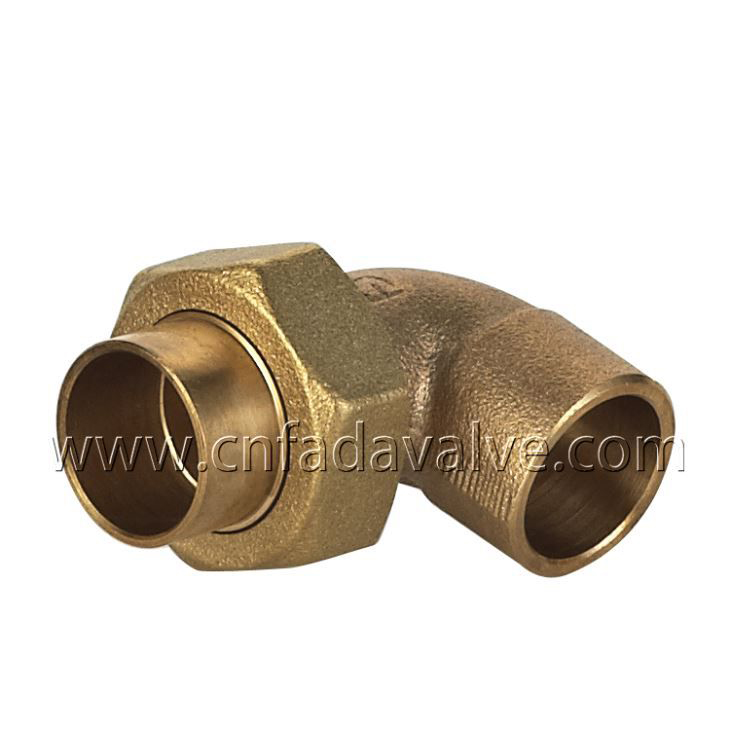
As a directional connector, the bronze elbow maintains a continuous and stable flow path while turbulence at the turning point. The internal bore of the elbow is designed to align smoothly with the connected pipe, reducing pressure loss caused by abrupt directional change. This function is important in water supply systems, heating loops, and cooling circuits where stable flow improves operational efficiency and reduces long-term wear on pumps and valves.
From an installation perspective, the press-fit structure allows this directional change to be achieved without thread cutting or heat-based joining. Once the pipe is inserted into the fitting and pressed using a dedicated tool, the elbow becomes a fixed directional joint that integrates into the pipeline layout.
Operational Precautions:
To ensure proper directional function, installers must confirm that the pipe ends are cut square and free from burrs before insertion. Misaligned or uneven pipe ends can affect the internal flow path and may weaken the joint seal. Additionally, the correct elbow angle should be selected according to actual layout requirements to avoid unnecessary stress on connected pipes.
Secure Sealing and Leak Prevention
Another major role of the press fit bronze elbow is to provide a sealed joint that prevents leakage at pipe connections. The press-fit system relies on an internal sealing ring, usually made of EPDM or similar elastomer, combined with the mechanical deformation of the fitting during pressing. When the press tool compresses the fitting, the pipe and fitting body form a tight, permanent seal.
This sealing mechanism allows press fit bronze elbows to maintain water-tight or fluid-tight connections under operating pressure. They are commonly used in domestic water supply lines, heating systems, and compressed air networks where leakage could pressure loss, structural damage, or reduced system efficiency.
Compared with threaded connections, press-fit joints do not depend on seal tape or thread compound. Compared with soldered joints, they avoid open flames and high temperatures. This changes the risk profile of installation and reduces potential fire hazards.
Operational Precautions:
Before pressing, the sealing ring must be inspected to ensure it is properly seated and undamaged. Dirt, cuts, or displacement of the seal can result in delayed leakage after installation. It is also necessary to confirm that the correct pressing profile matches the fitting type, as mismatched tooling can cause incomplete deformation and an unreliable seal.
Supporting System Installation Efficiency and Safety
Press fit bronze elbows play an important role in improving installation efficiency and on-site safety. Traditional joining methods such as soldering or threading require multiple steps, including surface cleaning, flux application, heating, cooling, and sealing. Press-fit installation replaces these steps with a simpler mechanical pressing process.
This reduction in process steps shortens installation time, especially in large projects such as residential complexes, commercial buildings, and industrial plants. Faster installation also lowers labor intensity and reduces the likelihood of installation errors caused by fatigue or inconsistent manual techniques.
From a safety standpoint, press-fit bronze elbows eliminate the need for open flames in confined spaces. This is particularly important in retrofitting projects, healthcare facilities, and buildings where fire risk must be tightly controlled. The press system also produces consistent joint quality when operated within specified parameters.
Operational Precautions:
Although press fitting is simpler, it requires proper tool calibration and regular maintenance. Press tools must be checked for jaw wear, hydraulic stability, and consistent output force. In addition, the pipe material and size must match the fitting specification exactly. Using incompatible pipe materials or incorrect diameters can result in press failure or joint weakening.
Long-Term Durability and Material Compatibility
The bronze material used in press fit elbows contributes to their long-term performance in various operating environments. Bronze offers good resistance to corrosion in potable water, heating water, and some mildly aggressive fluids. It is less prone to dezincification than some brass alloys, making it suitable for long service cycles in water systems.
Press fit bronze elbows are compatible with multiple pipe materials, including copper, stainless steel, and certain types of plastic pipes, depending on system design. This compatibility allows system designers to combine different materials within the same installation, balancing cost, strength, and corrosion resistance.
In long-term use, the mechanical stability of the pressed joint helps maintain system integrity under repeated thermal expansion, pressure variation, and vibration. The absence of threads also reduces stress concentration points that could otherwise fatigue cracking.
Operational Precautions:
Thermal expansion should be considered during system design and installation. Bronze and connected pipe materials may expand at different rates under temperature changes. Proper support spacing and expansion compensation measures should be included to avoid transferring excessive stress to the elbow joint. In addition, press-fit joints are permanent; once pressed, they cannot be adjusted or reused. Accurate positioning before pressing is therefore essential.