+86-576-82686004
 allen@badavalve.com / daisy@badavalve.com



 EN
EN
 Español
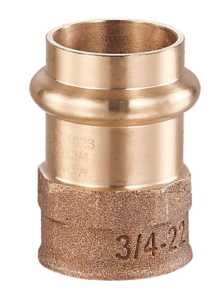
The press fit bronze adapter is a specialized component used in plumbing and mechanical systems to create secure, leak-proof connections between different pipe materials or fitting types. Unlike threaded or soldered connections, press fit adapters rely on precise dimensional interference and mechanical deformation to form a permanent joint.
Press Fit Bronze Adapter: Materials and Design Variations
Material Composition and Properties
Bronze, as a family of copper-based alloys, offers specific characteristics that make it suitable for press fit applications. The common bronze alloys used in these adapters are silicon bronze and phosphor bronze. Silicon bronze contains approximately 96 percent copper and 3 percent silicon, with small amounts of manganese and other elements. This composition provides good corrosion resistance, particularly in freshwater and marine environments, while maintaining sufficient ductility to deform during the pressing process without cracking. Phosphor bronze includes tin and phosphorus additions, which increase strength and wear resistance. The bronze material must balance two seemingly contradictory requirements: it must be soft enough to deform under the pressing tool without damaging the insertion pipe, yet strong enough to maintain clamping force over decades of service. The grain structure of the bronze, developed during the casting or forging process, determines this balance. Many press fit adapters are manufactured through hot forging or precision machining from wrought stock, processes that align the grain structure to optimize strength in the radial direction where clamping forces are higher.
Sealing Mechanism Design
The internal design of a press fit bronze adapter incorporates specific features to create a reliable seal. A circumferential groove machined into the inner bore houses an O-ring, typically made from EPDM rubber for potable water applications or FKM for higher temperature or chemical resistance. When the pipe is inserted and the pressing tool deforms the outer wall of the adapter inward, the bronze compresses around the pipe, simultaneously gripping the surface and compressing the O-ring against it. This dual action creates both mechanical retention and a fluid seal. The geometry of the deformed zone is critical; manufacturers design the adapter wall with varying thicknesses to control where and how the material yields during pressing. Some designs include a separate stainless steel gripping ring embedded within the bronze body. This ring contains teeth that bite into the pipe surface, providing additional pull-out resistance while the bronze body primarily contains the O-ring and provides corrosion resistance. The depth of the insertion stop, a shoulder inside the adapter, ensures the pipe reaches the correct position for the O-ring to align with the sealing surface.
Connection Configurations
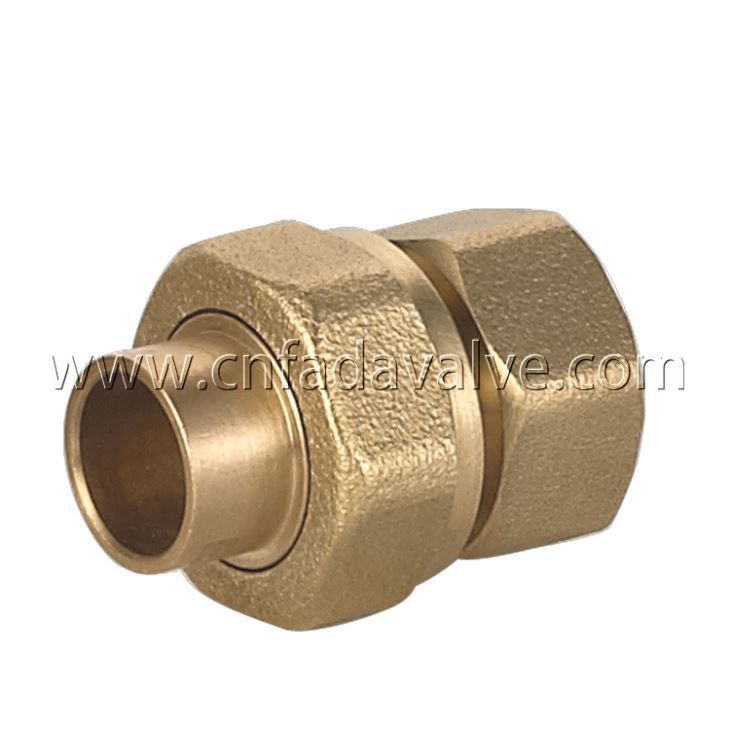
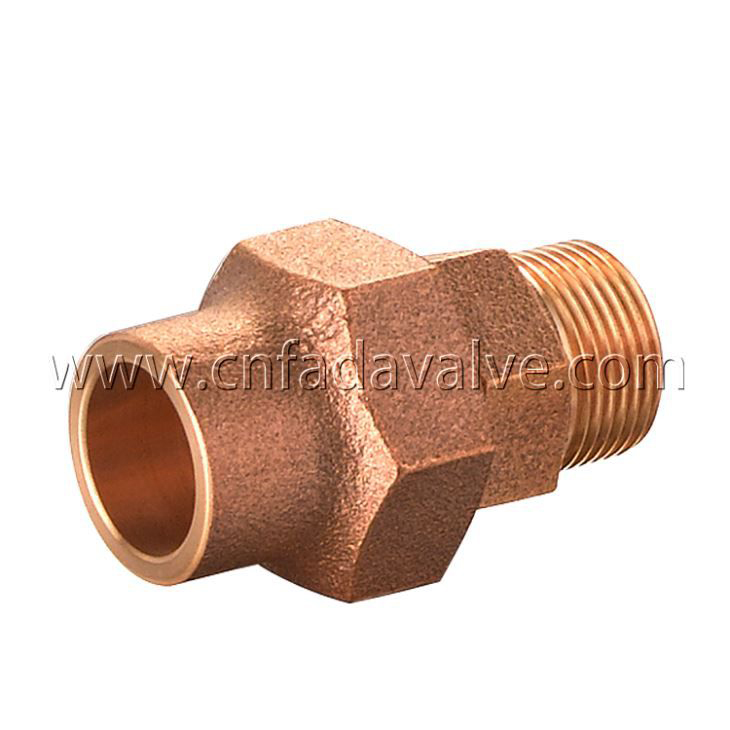
Press fit bronze adapters are manufactured in numerous configurations to connect pipes of different materials or to transition between pipe and fitting types. A common design is the press-to-sweat adapter, which has a press fit connection on one end for joining to copper tubing and a solder socket on the other end for traditional soldered connections to copper pipe. Another frequent configuration is the press-to-thread adapter, which combines a press fit end with a female or male National Pipe Thread connection. This design allows modern press fit installation to interface with threaded valves, equipment, or existing threaded piping systems. The transition end may be forged integrally with the bronze body or may be a separate component securely attached during manufacturing. For larger diameters, the adapter may incorporate reinforcement ribs or thickened sections to withstand the higher forces involved in pressing without distorting the threaded portion. The external shape of the adapter often includes flats or wrench surfaces near the threaded end to facilitate holding during thread engagement without damaging the press fit portion.
The Functional Purpose of the Press Fit Bronze Adapter
Elimination of Open Flames and Heat Hazards
One primary reason press fit bronze adapters are specified in modern plumbing systems involves safety and practicality. Traditional methods of joining copper pipes, such as soldering and brazing, require open flames to heat the fittings and melt the filler metal. This presents an ignition hazard in existing buildings, particularly during renovations where insulation, wood framing, or accumulated dust may be present. Fire damage resulting from plumbing work is a documented risk that has led to building code restrictions on torch use in certain occupancies. Press fit adapters eliminate this hazard entirely. The connection is made with a battery-powered or electric pressing tool that mechanically deforms the fitting around the pipe. No heat is generated, no flame is present, and no hot materials remain after installation. This characteristic makes press fit adapters particularly valuable in hospitals, high-rise buildings, historic structures, and other settings where fire safety is paramount or where obtaining hot work permits would delay construction schedules.
Installation Speed and Consistency
The mechanical nature of press fit connections significantly reduces installation time compared to traditional methods. A soldered joint requires cutting the pipe, cleaning both the pipe and fitting, applying flux, assembling the joint, heating with a torch until solder melts, feeding solder into the capillary space, allowing the joint to cool, and then cleaning off excess flux. This sequence typically takes several minutes per joint and depends heavily on the installer's skill. A press fit connection, after cutting and deburring the pipe, requires only insertion to the marked depth and actuation of the pressing tool, a process completed in seconds. The pressing tool applies consistent force and deformation every time, removing the variability inherent in manual soldering. This consistency means that joints are less dependent on installer technique, resulting in more reliable systems. The time savings translate directly to labor cost reductions, making press fit systems economically attractive for large projects despite the higher material cost of the fittings.
Compatibility with Wet Systems and Occupied Buildings
Press fit adapters offer the unique capability of joining pipes even when water is present in the system. Soldering requires completely dry pipes because water conducts heat away from the joint, preventing the solder from melting and flowing properly. In repair situations or when adding to existing systems, completely draining the piping can be difficult, time-consuming, and potentially damaging to building finishes. Press fit tools can make connections on pipes that are damp or contain residual water because the mechanical deformation does not depend on achieving a specific temperature. This capability allows repairs and additions to be completed with minimal disruption to building occupants. In occupied buildings such as apartments, hotels, and offices, the ability to make connections without shutting down entire water systems for extended periods represents a significant operational advantage. The press fit adapter makes it possible to isolate only the immediate work area, maintaining service elsewhere in the building.