+86-576-82686004
 allen@badavalve.com / daisy@badavalve.com



 EN
EN
 Español
Lead free bronze fittings are widely used in modern plumbing and heating systems as environmentally safer alternatives to traditional lead-containing brass components. These fittings are commonly applied in potable water systems, heating circuits, and industrial piping networks. While they are designed to meet strict safety and performance standards, production errors and operational issues can occur.
How Do Production Errors Occur in Lead Free Bronze Fittings?
Production errors in lead free bronze fittings can arise from various stages of the manufacturing process, including alloy preparation, casting, machining, and quality control.
1. Alloy Composition Issues
Lead free bronze is an alloy primarily composed of copper, tin, and other elements such as zinc or nickel. If the proportion of these components deviates from the specified range, mechanical properties and corrosion resistance may be compromised.
Improper melting temperature or insufficient mixing can bring about segregation of elements.
Excess or deficient tin content can reduce strength or increase brittleness.
2. Casting and Mold Defects
Bronze fittings are produced using casting methods such as sand casting, investment casting, or die casting. Defects during casting can affect structural integrity.
Porosity: Gas trapped in molten bronze may form small cavities inside the fitting.
Shrinkage: Uneven cooling can cause internal voids or dimensional irregularities.
Surface defects: Improper mold handling may bring about rough or uneven surfaces, which can affect sealing and aesthetic appearance.
3. Machining and Finishing Errors
After casting, fittings undergo machining to achieve precise thread dimensions, sealing surfaces, and other features.
Incorrect cutting speeds or tool wear can cause thread misalignment or burrs.
Over-machining may weaken the component or remove protective surface layers.
4. Quality Control Oversights
Even minor lapses in inspection can result in defective fittings reaching the supply chain. This may include untested mechanical strength, overlooked dimensional tolerances, or undetected surface flaws.
What Does Lead Free Bronze Fittings Include?
Lead free bronze fittings encompass a range of components used to connect, redirect, or terminate piping systems. Typical types include:
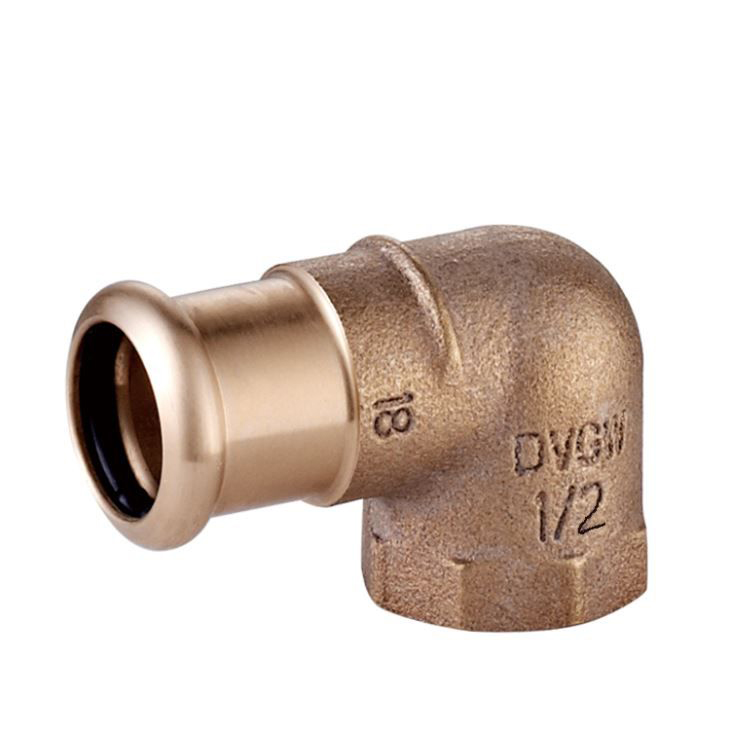
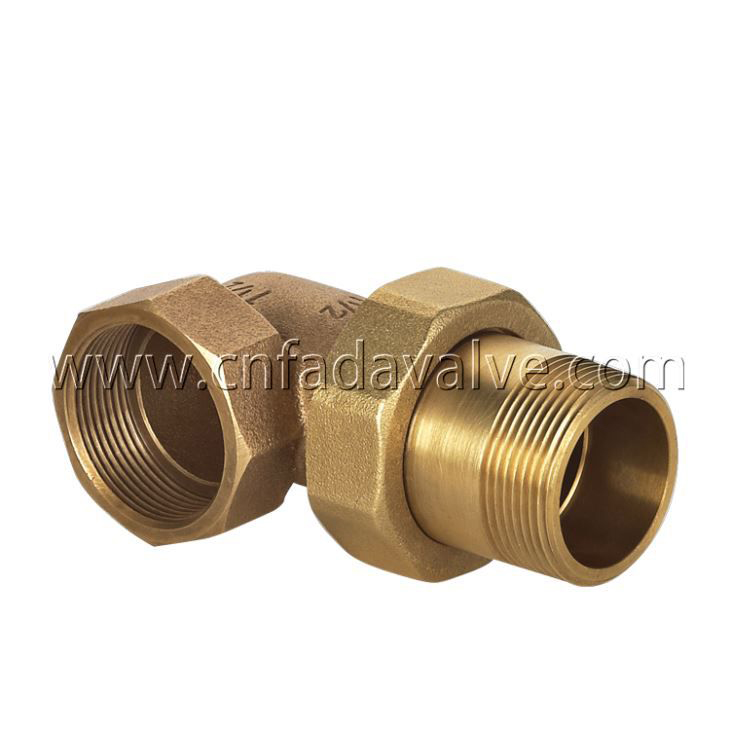
1. Elbows
Used to change the direction of a pipe, commonly at 45 or 90 degrees.
Maintain smooth internal surfaces to reduce flow resistance.
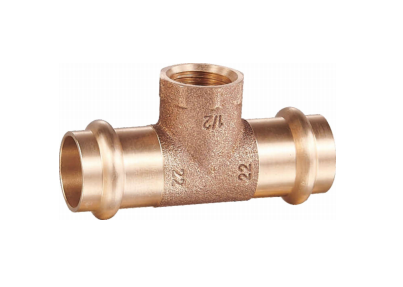
2. Tees and Crosses
Allow branching of a piping system.
Threads or press connections are designed for secure joint formation.
3. Couplings and Unions
Connect two pipes in a straight line.
Unions allow easy disassembly for maintenance without cutting the pipe.
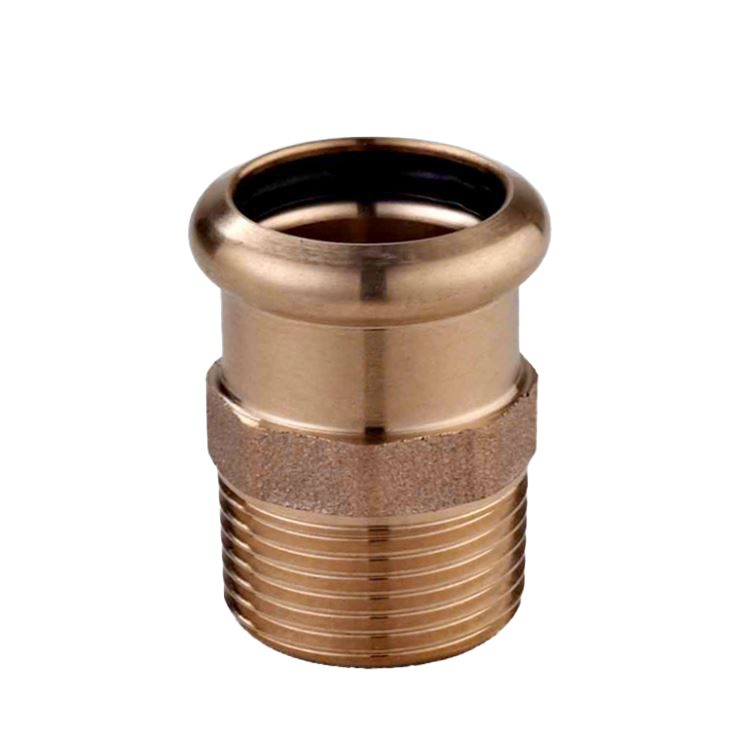
4. Adapters
Enable connection between pipes of different diameters or materials.
Provide transition points in mixed-material systems such as copper-to-PVC or copper-to-stainless steel.
5. End Caps and Plugs
Seal pipe ends temporarily or permanently.
Maintain system pressure and prevent leakage during testing or shutdowns.
All these fittings are designed for lead free operation to comply with environmental and health regulations, particularly in potable water applications.
Common Problems and Solutions for Lead Free Bronze Fittings
Even properly manufactured fittings can encounter problems during installation or operation. Understanding typical issues allows users to prevent or mitigate them.
1. Leakage at Threads
Threaded fittings may leak if the thread seal is insufficient or misaligned.
Solution: Apply PTFE tape or approved thread sealant. Ensure correct torque is applied without over-tightening, which could strip threads.
2. Corrosion or Discoloration
Although lead free bronze resists corrosion, exposure to aggressive water chemistry or improper surface treatment may cause surface oxidation.
Solution: Select fittings with appropriate alloy composition for local water conditions. Regular inspection can detect early signs of corrosion.
3. Dimensional Inaccuracy
Fittings may not align properly if casting or machining errors occur, causing gaps or improper pipe alignment.
Solution: Measure key dimensions before installation. Reject any fittings outside tolerance. Manufacturers can adjust machining programs or molds to improve consistency.
4. Cracks or Structural Weakness
Internal porosity or over-machining can bring about cracks under pressure.
Solution: Conduct pressure testing after installation. During production, implement non-destructive testing methods such as X-ray or ultrasonic inspection to detect internal voids.
5. Difficulty in Assembly
Sometimes, press-fit or tight threaded connections can make assembly challenging.
Solution: Ensure pipes are clean, deburred, and properly aligned. Lubricants approved for potable water systems can assist in assembly without compromising safety.