+86-576-82686004
 allen@badavalve.com / daisy@badavalve.com



 EN
EN
 Español
Pipe installation schedules slip. Labor hours climb past the original estimate. A single rework on a soldered joint can unravel a week of planning — and in occupied buildings, every extra hour on-site creates friction with facility managers and end clients alike. If you have been evaluating whether to shift away from traditional threaded or soldered connections on your next potable water project, the case for press-fit No Lead Brass Fittings is worth examining carefully. The efficiency gains are real, and they compound across the course of a full project rather than showing up only on individual joints.
The comparison is not simply about speed. It involves installation risk, regulatory compliance, labor skill requirements, and total project cost. Each of these factors pulls in the same direction when press-fit systems are weighed against conventional alternatives — particularly in drinking water applications where lead-free compliance is non-negotiable.
Why Connection Method Matters More Than Most Buyers Expect
The Hidden Cost Lives in the Steps, Not the Fitting
Traditional soldered connections require a sequence of preparation steps before any actual joining takes place. Cut the pipe. Deburr the end. Clean the surface. Apply flux. Apply heat. Allow cooling. Inspect the joint. Each of those steps adds time, and each introduces a potential failure point.
Press-fit bypasses almost all of that. The pipe is inserted, the tool is applied, the joint is complete. No open flame. No flux residue. No waiting for the joint to cool before the next connection can be made.
For a small residential repair, the difference might be modest. Across a commercial building with hundreds of connections, it is substantial — in working hours, in scheduling complexity, and in the skill level required to maintain consistency.
Does Threaded Connection Offer a Comparable Alternative?
Threaded connections are faster than soldering in some respects, but they carry their own overhead. Threading the pipe end requires either a threading machine on-site or pre-threaded pipe ordered in advance. Joints need sealing compound or tape applied carefully. Over-tightening or under-tightening either damages the fitting or creates a leak path.
Press-fit removes the threading step entirely. The connection geometry is controlled by the fitting and the press tool rather than by the installer's judgment on torque. That standardization translates directly into consistent results across different crew members and different days of work.
What Makes Press-Fit Particularly Suited to Lead-Free Systems?
Compliance Requirements Shape Material and Method Choices Together
Drinking water systems in many markets face metal content regulations that have tightened considerably over the past decade. Fittings, valves, and nipples used in potable water lines must meet these standards — and documentation of compliance has become a routine part of project handover packages.
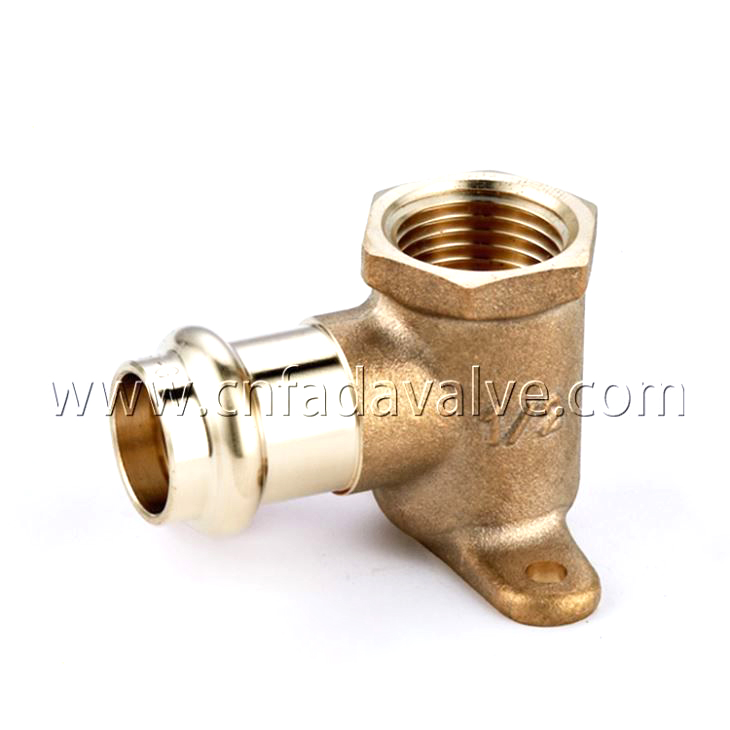
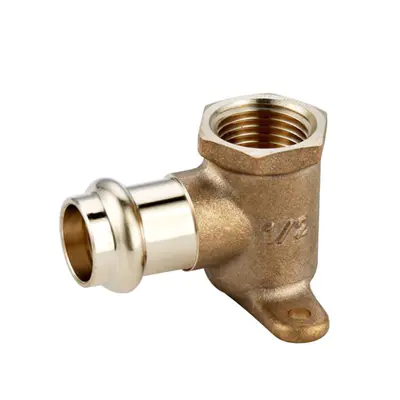
No Lead Brass Fittings used in press-fit configurations are available with the certifications required for these applications. The material composition is controlled at the alloy level, not added as a surface treatment, which means the compliance profile holds up across the full service life of the fitting rather than degrading over time.
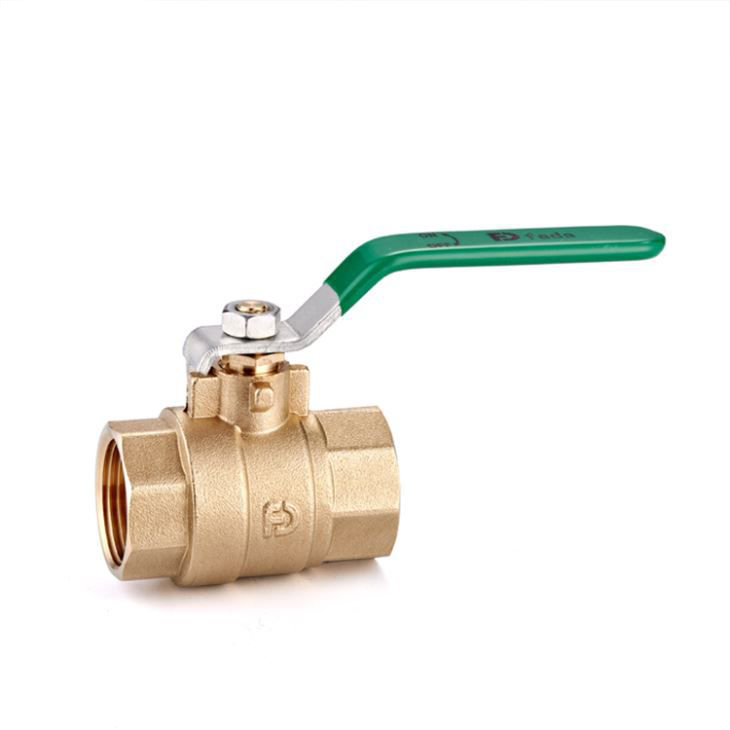
When specifying Lead-Free Brass Valves and fittings for a potable water system, confirming that press-fit versions carry the applicable certifications is a straightforward part of procurement. The availability of certified press-fit options has expanded considerably, making it practical to build a fully press-fit system from the source connection through to the distribution points.
No Flame Means No Hot Work Permits
In occupied or sensitive buildings — hospitals, schools, hotels, commercial spaces with active tenants — any work involving open flame requires a hot work permit, a fire watch, and often a shutdown of nearby systems. That administrative overhead is not trivial. It adds planning time before the work starts and compliance paperwork after it finishes.
Press-fit eliminates the flame entirely. A press tool is not classified as hot work. Installation can proceed in occupied spaces without the associated permit process. For renovation and retrofit projects especially, this has direct implications for project scheduling and client disruption.
Comparing Connection Methods Side by Side
The differences between connection methods become clearer when placed in direct comparison across the factors that matter to project planning.
| Factor | Soldering | Threaded | Press-Fit |
|---|---|---|---|
| Preparation steps required | Multiple | Moderate | Few |
| Open flame needed | Yes | No | No |
| Hot work permit required | Yes (occupied buildings) | No | No |
| Skill level dependency | Higher | Moderate | Lower |
| Connection time per joint | Longer | Moderate | Shorter |
| Consistency across crew | Variable | Moderate | Higher |
| Lead-free compatibility | Material-dependent | Material-dependent | Available certified |
| Suitability for renovation | Limited | Moderate | Well-suited |
Reading across that comparison, the pattern is consistent. Press-fit does not trade off one advantage for a weakness elsewhere — it holds up across many variables that affect real project outcomes.
How Installation Efficiency Translates to Project Economics
Labor Time Is Where the Savings Accumulate
Fitting cost is one line item. Labor cost across a full project is a much larger one. When installation time per connection drops meaningfully, the labor hours saved multiply across every joint in the system. On projects with hundreds or thousands of connections, that multiplication produces a figure that often more than offsets any premium on the fitting itself.
The calculation is project-specific, but the direction is consistent: faster connections per joint, fewer prep steps, and reduced rework from installation errors all point toward lower total installed cost even when the unit price of the fitting is higher than a conventional alternative.
Rework Is Expensive in Ways That Are Easy to Undercount
A soldered joint that fails inspection requires cutting out the fitting, cleaning the pipe end, and re-doing the connection from scratch. Beyond the direct cost of that repair, there is the scheduling disruption, the potential for water damage if the failure occurs after pressure testing, and the impact on project completion timelines.
Press-fit connections, when made correctly with the right tool, produce a consistent result. The standardized process reduces the variability that produces rework. For project managers pricing a bid, lower rework probability is a legitimate factor in total cost modeling — even if it does not appear as a line item in the fitting price.
Does Project Scale Affect the Efficiency Argument?
On small jobs, the efficiency advantage is present but less dramatic. On large commercial or multi-unit residential projects, the argument for press-fit strengthens considerably. The labor-hours-saved figure scales with connection count. The hot work permit savings scale with the number of occupied areas involved. The scheduling benefit scales with project complexity.
This is why press-fit adoption has been notably strong in large-scale renovation projects, healthcare facilities, and hospitality construction — contexts where speed, safety, and schedule reliability matter at a level that justifies any cost differential at the fitting level.
Lead Free Brass Nipple and Valve Integration in Press-Fit Systems
Building a Complete Lead-Free System Requires Consistent Specification
A press-fit connection strategy is only as compliant as the weakest component in the system. If the fittings are certified lead-free but the nipples connecting them to valves are not, the compliance documentation for the whole assembly becomes complicated.
Specifying Lead Free Brass Nipple components alongside press-fit fittings and Lead-Free Brass Valves from the same source simplifies both procurement and documentation. It also reduces the risk of incompatible material pairings that can accelerate corrosion or create galvanic issues over time.
For procurement teams putting together a bill of materials for a potable water project, sourcing the full assembly from a supplier who produces compliant fittings, valves, and nipples in the same product range is a cleaner and lower-risk approach than assembling components from multiple sources with different certification bases.
What to Confirm Before Finalizing a Press-Fit Specification
Before committing a press-fit system to a project specification, a few practical checkpoints are worth working through:
- Confirm that all fittings, valves, and nipples carry the required lead-free certification for the applicable market.
- Verify that the press-fit tool specified is compatible with the fitting series being used — press profiles are not universally interchangeable.
- Check pipe end preparation requirements for the specific fitting range; some press-fit systems require a specific deburring profile to seat correctly.
- Review pressure and temperature ratings for the intended application, particularly if the system will carry hot water or operate at elevated pressures.
- Confirm availability of press-fit versions across all required fitting types — elbows, tees, reducers, end caps — to avoid mixed connection methods within the same system.
Working through these points at the specification stage prevents substitution problems during installation.
Matching Press-Fit Selection to Project Type
Not Every Application Calls for the Same Approach
Press-fit works across a wide range of project types, but the value it delivers is not identical in every context. Understanding where it performs well helps in allocating it appropriately within a project.
Renovation and retrofit projects in occupied buildings benefit strongly from the no-flame requirement and the faster installation pace. Scheduled downtime can be shorter, and the risk of smoke or fire damage in adjacent occupied spaces is eliminated.
New commercial construction benefits from the speed and consistency advantages. With multiple crews working in parallel, the standardized process reduces variation in joint quality across different installation teams.
Healthcare and education facilities benefit from compliance simplicity. Lead-free certification, no hot work, and clean installation in sensitive environments align well with the procurement requirements these sectors typically impose.
Residential multi-unit development benefits from the combination of speed and reduced rework. Higher connection counts and tighter schedules make efficiency gains at the joint level meaningful at the project level.
Evaluating Suppliers for Press-Fit Lead-Free Brass Components
Material Certification Is a Starting Point, Not a Complete Answer
A supplier providing No Lead Brass Fittings for press-fit applications should be able to supply documentation that confirms material composition, applicable certification standards, and pressure ratings. That documentation is part of the product, not an optional extra.
Beyond certification, the practical factors that affect procurement decisions include:
- Consistency of production quality across batches — particularly relevant for large projects where fitting performance needs to be uniform.
- Availability of the full product range required for a given system, including matching valves and nipples.
- Lead time reliability, especially for projects with fixed installation schedules.
- Technical support capability for specification questions and tool compatibility guidance.
A supplier who treats documentation and technical support as standard parts of the transaction rather than responses to special requests is easier to work with on complex projects.
For procurement managers, project engineers, and contractors evaluating press-fit No Lead Brass Fittings for an upcoming specification, the efficiency case is grounded in practical, project-level factors rather than theoretical claims. Faster connections, lower rework rates, no open flame requirements, and consistent lead-free compliance across fittings, valves, and nipples all contribute to a total installed cost and project risk profile that deserves serious consideration. If your current projects involve potable water systems, occupied building renovations, or applications where schedule reliability and compliance documentation are priorities, press-fit in a lead-free brass system is a specification worth developing in detail. Taizhou Bada Valve Co., Ltd. produces a full range of certified lead-free brass fittings, valves, and nipples suitable for press-fit system specifications — contact the team directly to discuss your project requirements and request documentation.